Some links on this site are affiliate links. We may earn a commission at no cost to you. Learn more.
Roof Underlayment Guide: Felt vs Synthetic vs Rubberized Asphalt
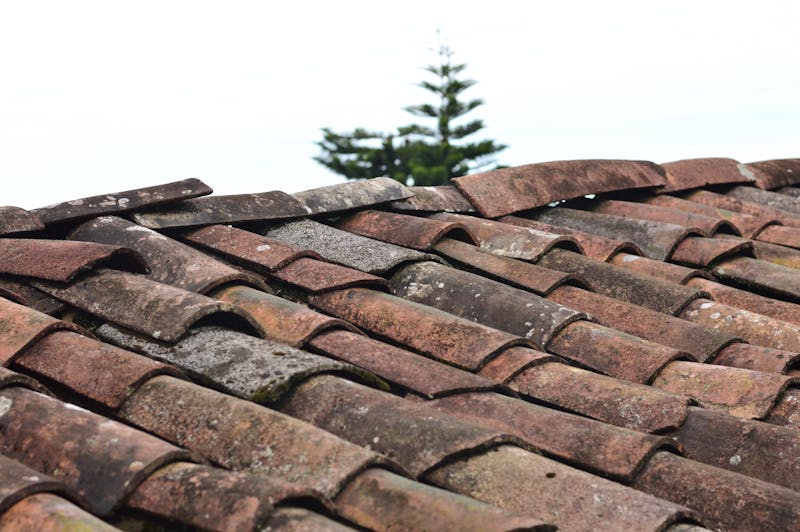
Roof underlayment is the unsung hero of any roofing system. It sits between the decking and the shingles, out of sight the moment the job is done — yet it’s often the last line of defense when a shingle blows off, when wind-driven rain finds its way under a lap, or when an ice dam backs water up under the eaves. Choosing the wrong underlayment — or skipping it in the wrong spots — can lead to leaks that cost far more than the money saved.
This guide breaks down all three main categories of roof underlayment, explains where each is required by code, and helps you decide what to specify or buy for your next project.
Why Underlayment Matters
Underlayment serves four primary functions:
- Temporary weather protection during installation — shingles don’t go on all at once, and rain doesn’t wait for roofers.
- Secondary water barrier — a backup if the primary roofing layer is breached.
- Moisture vapor management — some products are designed to let trapped moisture escape; others create a fully sealed barrier.
- A clean, stable nail base — underlayment smooths out minor deck irregularities and gives roofers a walkable surface.
Not all underlayments do all four things equally well. Material choice depends on climate, roof pitch, shingle type, and local building codes.
Type 1: Felt Paper (Asphalt-Saturated Felt)
Felt paper — also called “tar paper” or “roofing felt” — has been the industry standard for over a century. It’s made from a base of recycled paper or fiberglass fibers saturated with asphalt.
#15 Felt
#15 felt (sometimes called “15-pound felt,” though modern products weigh less than that) is the thinner, lighter option. It’s widely available at every home improvement store and costs $0.05–$0.08 per square foot installed, making it the cheapest underlayment on the market.
Pros:
- Inexpensive
- Lightweight and easy to handle
- Widely available
- Provides adequate secondary moisture protection under normal conditions
Cons:
- Tears easily during installation, especially in wind
- Not walkable — footsteps will break through
- UV degrades it quickly (typically 2–4 weeks of exposure maximum)
- Wrinkles and buckles when wet, which can telegraph through shingles
- Absorbs moisture rather than shedding it
Best for: Budget-conscious reroofing projects in mild climates where installation will be completed quickly and the deck is clean and flat.
#30 Felt
#30 felt is heavier, stiffer, and more durable than #15. It costs $0.08–$0.12 per square foot and provides meaningfully better tear resistance.
Pros:
- Stronger and less prone to tearing than #15
- Better temporary weather resistance
- Commonly required by code on low-slope applications (below 4:12) when used without additional protection
Cons:
- Still not truly walkable without risk of damage
- Still wrinkles and buckles when exposed to moisture
- Heavier and more awkward to handle on steep roofs
- UV resistance is still limited
Best for: Steeper residential roofs (4:12 and above) in moderate climates, or any application where a step up from #15 felt is warranted by local code.
Code Note on Felt
Most residential building codes require a minimum of one layer of #15 felt on roofs with pitches of 4:12 or greater. For slopes between 2:12 and 4:12, two layers of #30 felt with a specific headlap are often required. Below 2:12, most codes prohibit asphalt shingles entirely.
Type 2: Synthetic Underlayment
Synthetic underlayment has largely replaced felt paper as the professional’s choice over the last 15 years. Made from woven or spunbonded polypropylene or polyethylene, it delivers superior performance in virtually every measurable category.
Typical cost: $0.10–$0.20 per square foot — roughly double the cost of felt, but the performance gains are substantial.
Key Advantages Over Felt
Tear resistance is the headline feature. Synthetics won’t rip when a roofer steps on them or when wind gets underneath. A roll can be laid across an entire slope and remain intact through a typical workday.
Walkability is a significant safety benefit. Most synthetic underlayments are rated for foot traffic, reducing slip risk on steep roofs and making it easier to work without damaging the underlayment.
UV stability is far superior — most products are rated for 90–180 days of exposure before shingle installation is required. This matters on large or complex roofs where installation takes weeks, or in markets where material shortages delay completion.
Moisture performance is better in two respects: synthetic products shed water better than felt (fewer wrinkles, no soaking), and they don’t wrinkle or buckle when wet. The resulting smooth surface produces a flatter shingle installation.
Weight is dramatically lower. A roll of synthetic covering the same area as a roll of felt typically weighs 30–50% less, reducing fatigue on multi-day jobs.
What to Look For
When selecting a synthetic underlayment, look for:
- ASTM D226 Type II equivalent or better — the baseline performance standard
- Listed as “walkable” — specifically rated for foot traffic
- Printed reference lines — horizontal lines at standard shingle headlap intervals dramatically speed up installation
- Self-sealing laps — some premium products have factory-applied adhesive on the lap zone so seams seal without tape
Popular Products
- Grace Tri-Flex 30 — a reliable mid-grade synthetic widely used in residential work
- Owens Corning ProArmor — designed to be paired with OC shingle systems; good UV rating
- GAF FeltBuster — one of the thinnest synthetics available; great on low-slopes and complex roofs
- Titanium UDL 25/30/50 — a full line from entry-level to premium; the 50 is one of the toughest products on the market
For most residential reroofing projects, a mid-grade synthetic in the $0.12–$0.15/sq ft range is the sweet spot between cost and performance.
Type 3: Rubberized Asphalt (Self-Adhering Membrane)
Rubberized asphalt underlayment — commonly called “ice and water shield” — is a self-adhering membrane made from rubberized asphalt laminated to a polyethylene or granular-surface film. It is the premium, code-required product for the most vulnerable areas of any roof.
Typical cost: $0.25–$0.50 per square foot — two to five times the cost of felt.
How It Works
The rubberized asphalt layer is viscoelastic: it flows slightly at warm temperatures, self-sealing around fasteners driven through it. This means that nails, staples, and even roofing screws don’t create water pathways through the membrane. The self-sealing property is the product’s most important characteristic — it makes it far more forgiving of imperfect installations than any other underlayment type.
The peel-and-stick installation method also creates a sealed, bonded layer rather than a loose membrane held by laps. Water can’t get under it the way it can with felt or synthetic.
Where It’s Required
Building codes (International Residential Code and most state equivalents) require self-adhering ice-and-water shield in specific locations:
Eaves: In climates where ice dams are a concern (generally defined as areas where the outside design temperature is 25°F or below), ice and water shield must extend from the eave to at least 24 inches inside the interior wall line of the building. This typically means a 3–6 foot wide band along the entire eave.
Valleys: Many codes and virtually all shingle manufacturer warranties require ice-and-water shield in all valleys, typically 18–36 inches wide (measured from each side of the valley center).
Around penetrations: Around skylights, chimneys, plumbing vents, and any other roof penetration, ice and water shield provides a sealed backup that standard underlayment cannot match.
Low-slope areas: On roof sections below 4:12 pitch, many manufacturers require self-adhering membrane rather than felt or synthetic as a condition of the shingle warranty.
Product Grades
Not all ice-and-water shield is the same. Two key distinctions:
Granular-surfaced vs. smooth-surfaced: Granular surface products have an aggregate top layer that shingles can be applied directly over. Smooth-surfaced products require a release film to be removed before shingling; they’re typically used in valleys and under metal flashing where direct shingle application isn’t the plan.
Standard vs. high-temperature: Standard rubberized asphalt can soften in extreme heat, potentially causing it to bond to shingles and damage them during removal. High-temperature formulations (rated to 250°F+) are recommended in southern states and on south-facing slopes in hot climates.
Popular Products
- Grace Ice & Water Shield — the original and still widely considered the benchmark
- Carlisle WIP 300HT — high-temperature formulation; preferred in hot climates
- GAF WeatherWatch — broadly available and compatible with GAF shingle systems
- Owens Corning WeatherLock — widely available; granular surface version is walkable
Underlayment Requirements by Roof Zone
| Roof Zone | Minimum Requirement | Recommended |
|---|---|---|
| Main field (≥4:12) | #15 felt or equivalent synthetic | Synthetic underlayment |
| Main field (2:12–4:12) | Two layers #30 felt or equivalent | Synthetic + self-adhering in laps |
| Eaves (cold climates) | Ice and water shield to 24” past wall | Ice and water shield |
| Valleys | Ice and water shield 18–36” wide | Ice and water shield |
| Around chimneys/skylights | Ice and water shield | Ice and water shield |
| Hip and ridge caps | Manufacturer-specified underlayment | Synthetic or ice-and-water |
Making the Right Choice
For budget projects in mild climates: #30 felt on the main field with ice-and-water shield at the eaves and valleys. This is a serviceable, code-compliant installation.
For most residential projects: Synthetic underlayment on the main field, ice-and-water shield at all required locations. This is the current professional standard and the right balance of cost and performance.
For premium projects, cold climates, or low slopes: Consider extending ice-and-water shield coverage beyond code minimums — full valley coverage, wider eave bands, around all penetrations. The cost difference between code-minimum and full-coverage ice-and-water shield is modest relative to total project cost.
One thing not to do: Skip the underlayment entirely on the theory that shingles are “enough.” They aren’t — especially not over OSB decking that swells when wet. Every manufacturer’s warranty requires proper underlayment, and most code inspectors will flag a roof installed without it.
Underlayment is one of the lowest-cost components on any roofing project and one of the highest-impact decisions you can make for long-term performance. Spend the extra $0.05–$0.10 per square foot on a quality synthetic. At the eaves and valleys, always use self-adhering membrane — no exceptions.
Get our free Roof Maintenance Checklist — delivered to your inbox.
No spam. Unsubscribe anytime.
Recommended Roofing Products

Owens Corning Duration Series Shingles
Industry-leading SureNail Technology for superior wind resistance. Duration shingles offer a lifetime limited warranty and exceptional curb appeal.
- ✓ SureNail Technology
- ✓ Lifetime limited warranty
- ✓ Wind resistant up to 130 mph
- ✓ Available in 50+ colors
As an Amazon Associate, we earn from qualifying purchases.
GAF Timberline HDZ Shingles
America's #1-selling shingle. LayerLock Technology grips 99.9% of nails for a stronger, safer roof installation.
- ✓ LayerLock Technology
- ✓ StainGuard Plus
- ✓ 130 mph wind resistance
- ✓ Good Housekeeping Seal
As an Amazon Associate, we earn from qualifying purchases.

Amerimax Home Products Gutter Guard
Easy snap-in installation keeps leaves and debris out of gutters. Fits standard 5-inch gutters and works with all gutter materials.
- ✓ Snap-in installation
- ✓ Fits 5-inch gutters
- ✓ UV stabilized
- ✓ Galvanized steel mesh
As an Amazon Associate, we earn from qualifying purchases.
Get Your Free Roof Maintenance Checklist
Join thousands of readers. Expert tips and guides delivered to your inbox — no spam, ever.
No spam. Unsubscribe anytime. View our Privacy Policy.
Need a Roofing Pro? Get a Free Estimate
Connect with a certified local roofer — no obligation.
Affiliate Disclosure
Some of the links on this page are affiliate links. If you click on one of these links and make a purchase, we may receive a small commission at no additional cost to you. This helps support our site and allows us to continue providing free content.
We only recommend products we believe in. All opinions are our own. We are a participant in the Amazon Services LLC Associates Program, an affiliate advertising program designed to provide a means for us to earn fees by linking to Amazon.com and affiliated sites.

ShingleScience Team
Roofing Contractor & Founder of ShingleScience